
Modernist Maker Digest 022: Eileen Agar
Life as collage, Surrealist summer holidays, and ceremonial hats
To celebrate Alison Jacques’ current Eileen Agar exhibition - and inspired by summer trips to the seaside to escape the heatwave - our latest Modernist Maker Profile explores the life and work of an endlessly inventive and intriguing artist, whose work made Surrealism fluid, slippery, and subaquatic. In a long life spent creating across eclectic mediums, her playful work found joy in human connection and imagination, even in the darkest decades of the twentieth century…
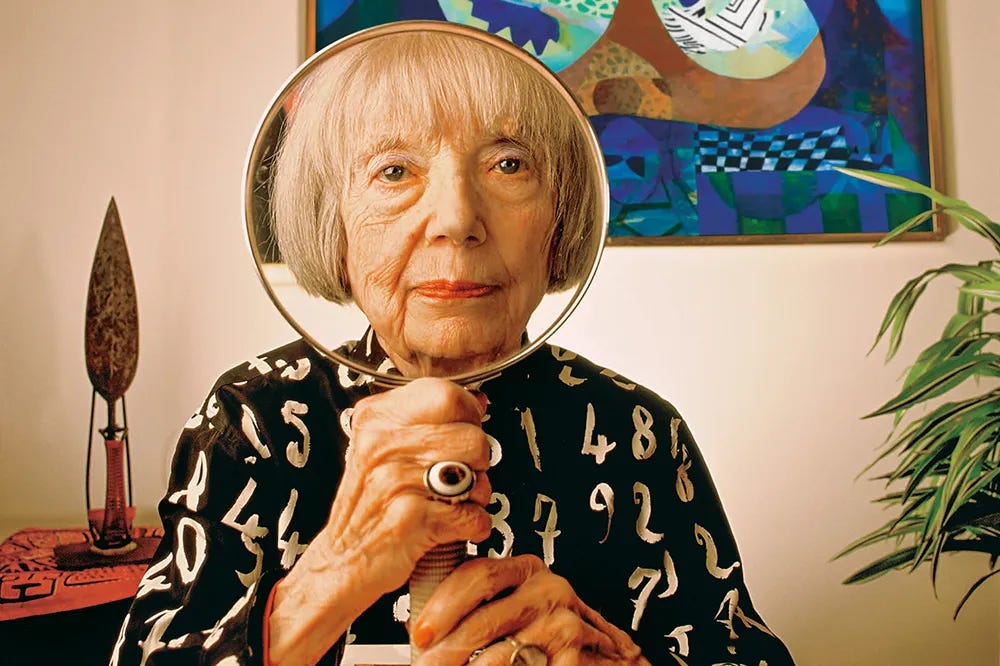
‘I have spent my whole life in revolt against convention, trying to bring colour and light and a sense of the mysterious to daily existence. One must have a hunger for new colour, new shapes, and new possibilities of discovery.’
Eileen Agar’s kaleidoscopic career spanned most of the twentieth century. She moved easily through major artistic movements and circles, from Cubism to Surrealism, but all the while pursued her own unique artistic vision, undaunted by the likes of Picasso and Man Ray. Collage and assemblage informed much of Agar’s work, whether in the literal creation of collaged work and surreal hats, or in her magpie-like approach to art history and the natural world. Her experimental use of materials made for a surprising and ever-evolving body of work that continues to fascinate almost a century on from the start of her career.
A headstrong young woman, Agar rebelled against her privileged family and the series of elite schools they’d sent her to. Her studies at London’s Slade School of Art in the early 1920s introduced her to a new world of creative freedom and modern living; by 1929, she was living in Paris and counted Surrealist leaders André Breton and Paul Éluard among her friends. Energised by this encounter with Surrealism, she set about creating radical new art that incorporated mysterious symbols and abstract forms. She was one of the few women included in the 1936 London International Surrealist Exhibition, organised by Roland Penrose and Herbert Read.
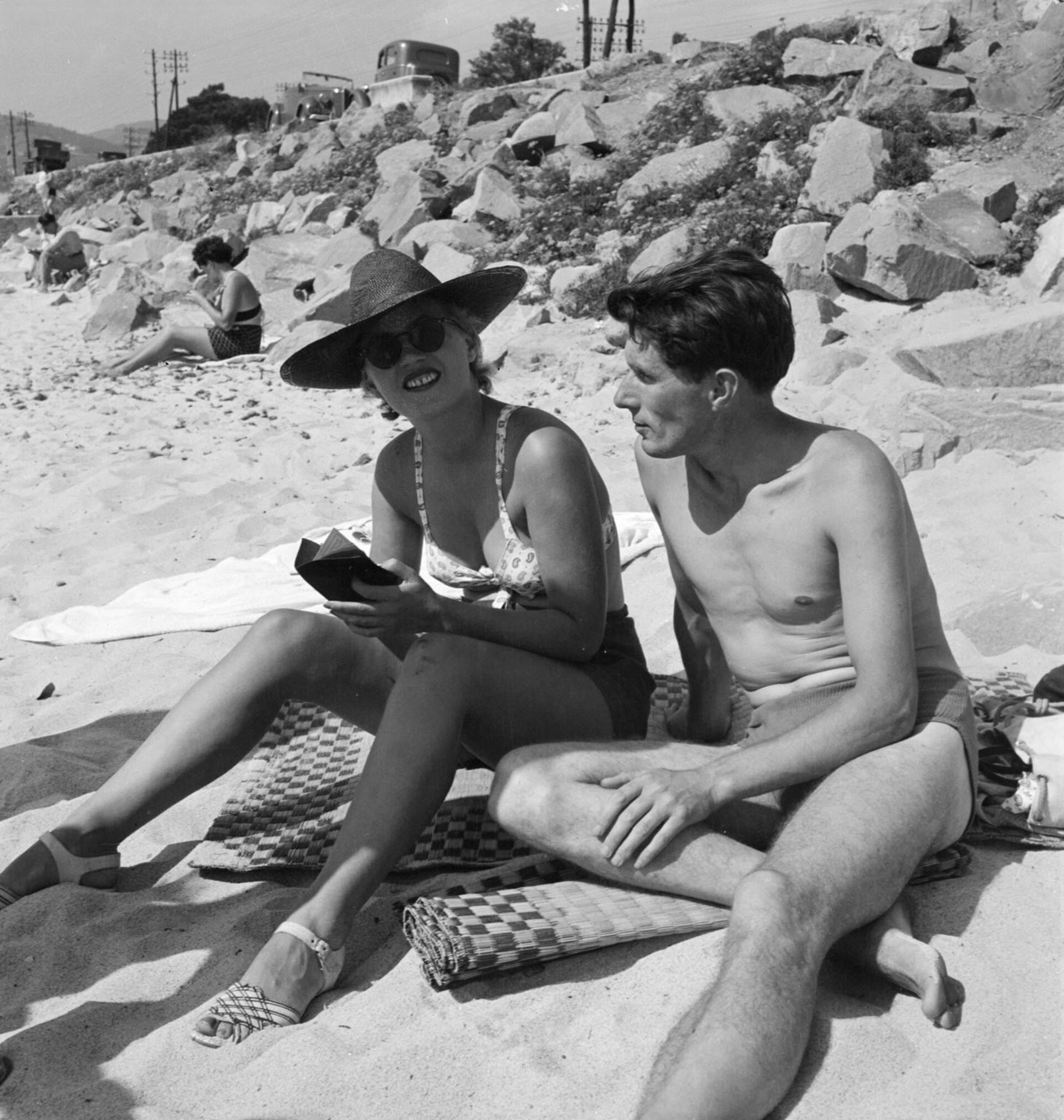
Agar was swept up in the seductive networks of Surrealism, where creativity and sexuality collided. She joined the legendary Surrealist holiday to Cornwall in 1936 - a ‘surrealist invasion’, in Penrose’s view, that involved a huge group of artists, including Penrose, Lee Miller, Leonora Carrington, Max Ernst, Man Ray, and Ady Fidelin who all descended on a cottage in Truro. Art, life, and love entwined in typically Surrealist style, with Agar later recalling:
‘It was a delightful surrealist house party that July, with Roland taking the lead, ready to turn the slightest encounter into an orgy. I remember going off to watch Lee taking a bubble-bath, but there was not quite enough room in the tub for all of us…’
A year earlier, she spent a formative summer with Paul Nash in Swanage, Dorset. A short-lived but intense artistic and sexual collaboration simmered between the pair, and Agar became fascinated by Nash’s interest in found objects scavenged from the shore. The affair ended, but artistic inspiration lingered and Agar continued to incorporate objects into her artwork to dazzling effect.
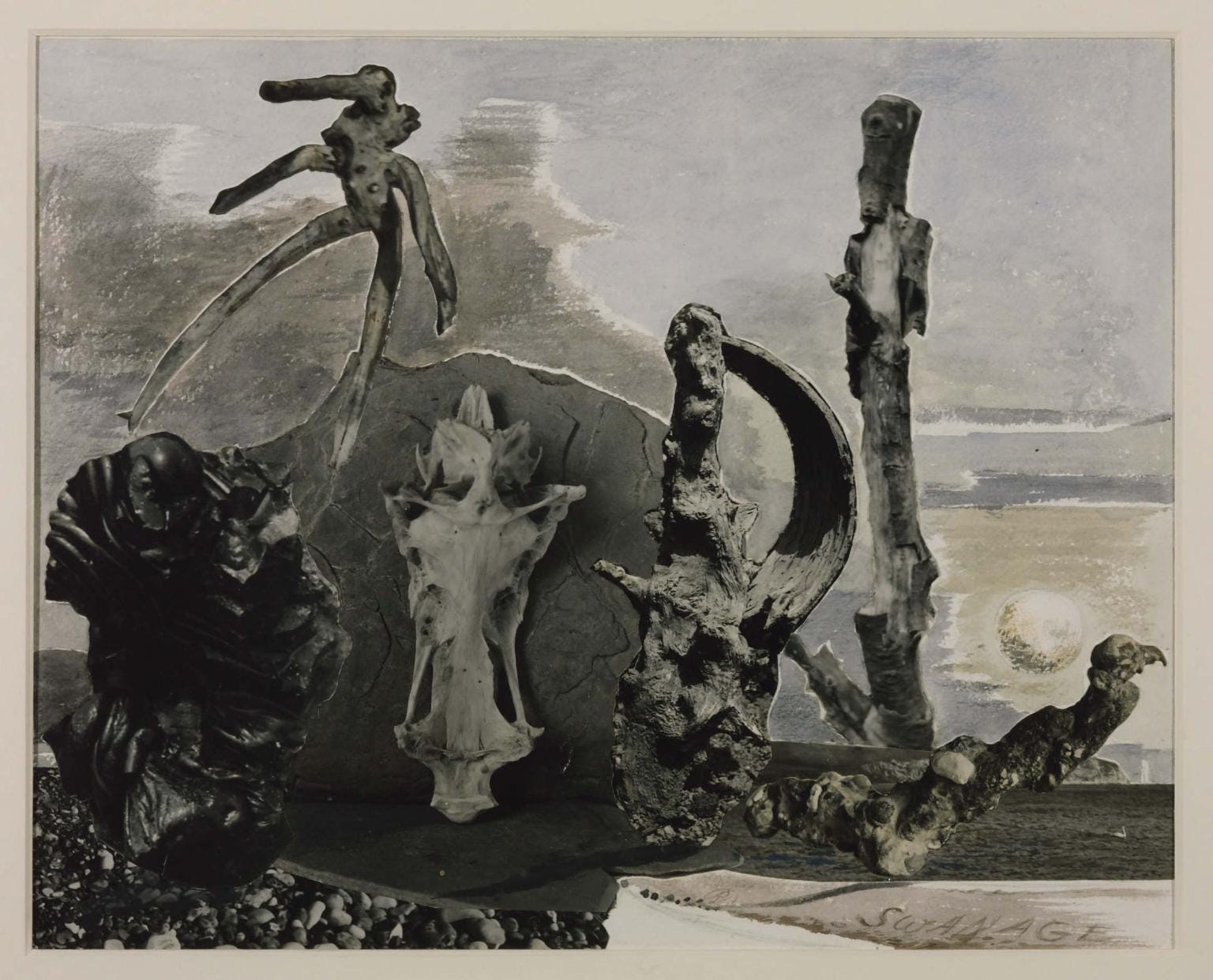
Despite the hijinks, Agar’s beach holidays in the 1930s were a serious source of inspiration. The spirit of play and freedom combined with inspiration from the landscape to infuse her work with new energy. Aquatic forms and natural beach objects began to shape her artistic language. In Angel of Anarchy (1936-40), she explores the decorative quality and textures of organic and man-made materials, creating a darkly ambiguous work that flips the Surrealist femme-enfant muse, while capturing the uncertainty and tumult of the period.
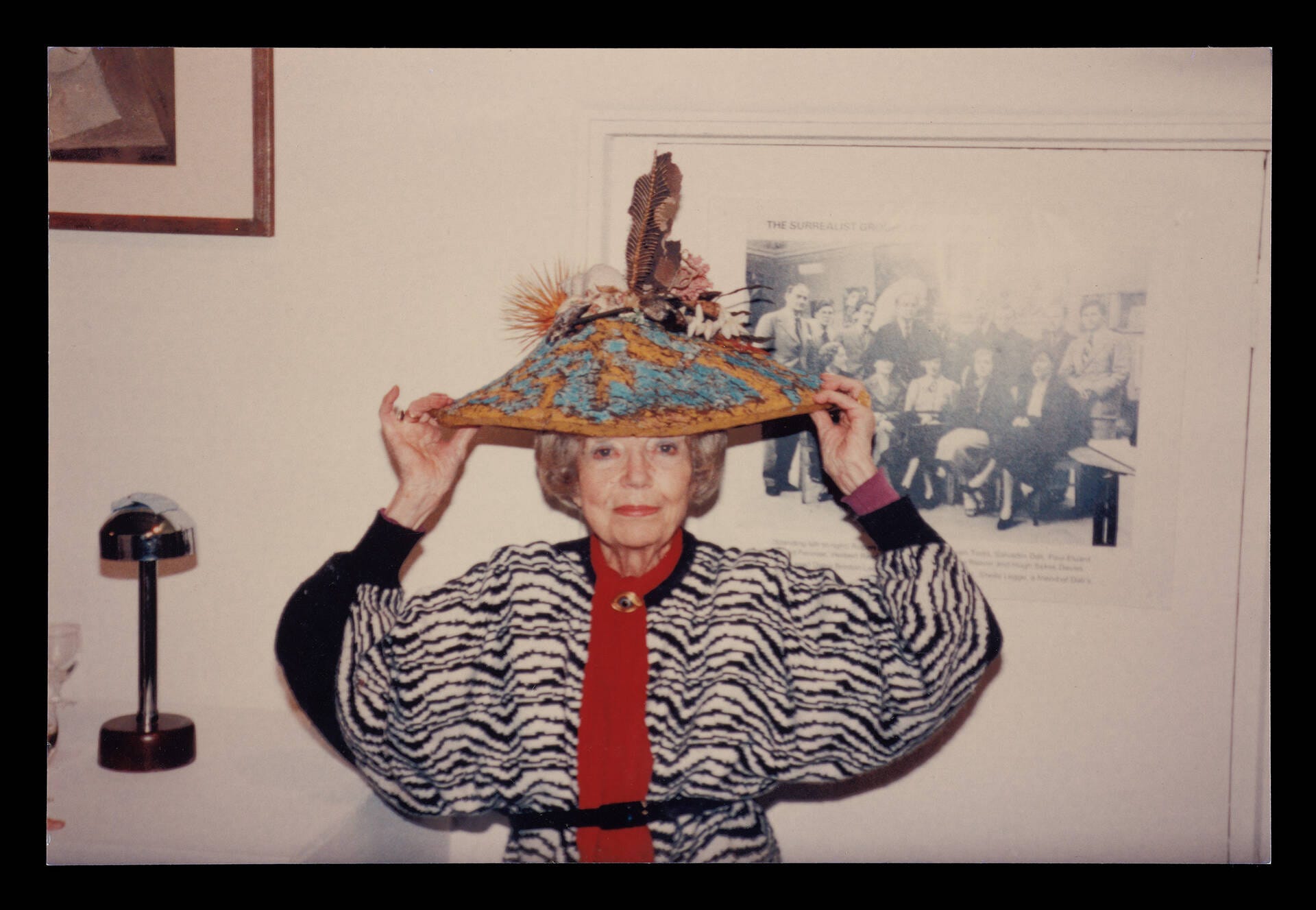
In more playful fashion, for Ceremonial Hat for Eating Bouillabaisse (1936), Agar assembled marine objects (including coral seashells, a sea-urchin and a lobster tail - there were several versions) into a strikingly surreal hat. In a subversive moment of performance art, Agar was filmed for a British Pathé newsreel parading down a London street in the hat, with people turning to stare, open-mouthed in shock.
Fashion and design were a lifelong source of pleasure and creativity for Agar, a way of bringing art into everyday life. Her home and studio in London’s Earl’s Court was a work of surrealist assemblage art, kitted out with art deco furniture and remodelled by architect Rodney Thomas (who also designed a clock and other furnishings for the house). In the late 1980s, she collaborated with textile designer Susannah Cartwright on the design of a dress to mark the publication of her autobiography A Look at My Life. In 1940, one journalist summed up her aesthetic:
‘she is a confirmed picker-up of junk-shop trifles and has a considerable talent for combining irrelevant objects [which] bring to her terracotta-and-blue studio an atmosphere of bright fantasy into which her white cat with its odd eyes fits perfectly.’
In the years after the Second World War, Surrealism passed from a radical movement to part of art history, but Agar continued to innovate and imagine strange aquatic worlds. She travelled widely and, on every trip, made time to forage and beach-comb for materials that made their way into her art.
By this point, collage was not just an artistic strategy, but a way of life for Agar: ‘my life is a collage, with time cutting and arranging the materials and laying them down, overlapping and contrasting, sometimes with the fresh shock of a surrealist painting.’
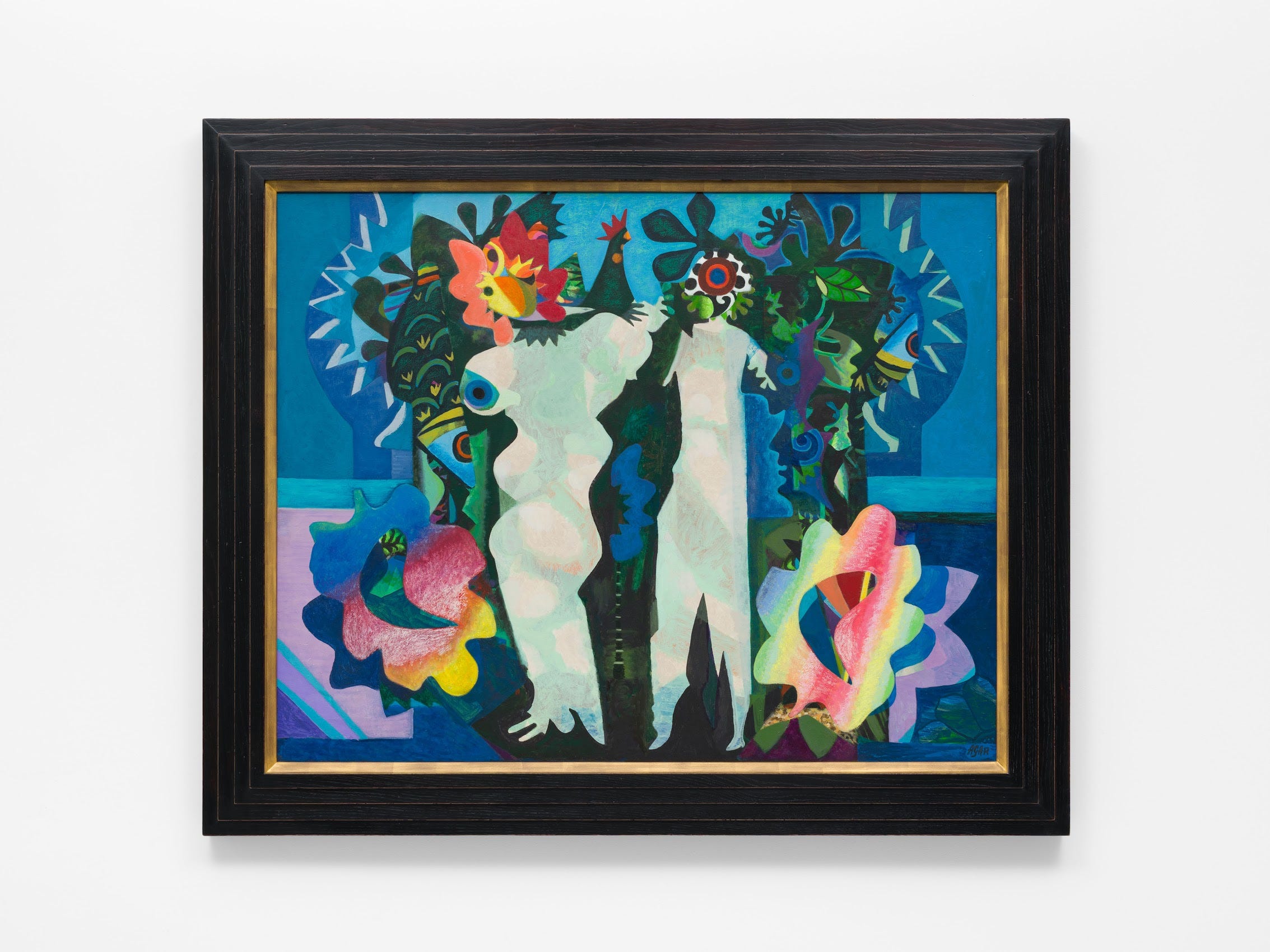
Although it’s tempting to linger on the scintillating details of Agar’s life among the Surrealists, the latter years of her career were just as productive and exciting. She brought her collagist eye to later-life painting and found fresh energy by returning to impressions and images formed decades earlier.
In the 1980s, she looked back on a series of photographs of rock formations at Ploumanac'h in Brittany that she took on holiday in 1936. Agar was intrigued by the way they resembled ‘enormous prehistoric monsters sleeping on the turf above the sea’, or surreal body parts (she gave them names like ‘Rockface’ and ‘Bum and Thumb Rock’). Shaped by the power of the sea, these formations were sublime but also uncanny, absurd - quintessentially Surreal.
In a series of acrylic paintings, she reinterpreted her photographs, presenting them in a dream-like pastel palette, as if filtered through the haze of her subconscious. They take on a new presence and demonstrate how deeply what we see and experience shapes our inner landscape, only to emerge in vivid forms of creative expression many years later.


Agar’s lifelong pursuit of new forms and perspectives took her on a journey across mediums, countries, and artistic circles. But throughout, she stayed faithful to her interest in marine materials and the organic language of seascapes, often using this as a lens through which to explore the boundary between the decorative and the natural. Across her long career, she expressed a brilliance in capturing joy and playfulness. Whether in collage, assemblage art, design, or painting, her work reveals that this quality can be defiant and powerful - an affirmation of hope and humanity in the face of dark forces:
‘Life’s meaning is lost without the spirit of play. In play all that is lovely and soaring in the human spirit strives to find expression. To play is to yield oneself to a kind of magic. In play the mind is prepared to accept the unimagined and incredible, to enter a world where different laws apply, to be free, unfettered and divine.’
Eileen Agar at Alison Jacques, London until 25 July
Further Reading
Eileen Agar, A Look at My Life
Laura Smith, Eileen Agar (Handheld Press Modern Women Artist Series)